


Dual-Channel Expansion Base Plate For 300G NVLink Interconnect Dual SIM Aom-SXMV Simplification For V100 SXM2 Graphics Card
Dual-Channel Expansion Base Plate For 300G NVLink Interconnect Dual SIM Aom-SXMV Simplification For V100 SXM2 Graphics Card
Regular price
$161.11
Regular price
$0.00
$161.11
Sale price-% OFF
Unit price
per
 12 years in business
- Superior Customer Service
- We Are Reliable & Trusted




🛠️ Core Functional & Architectural Features
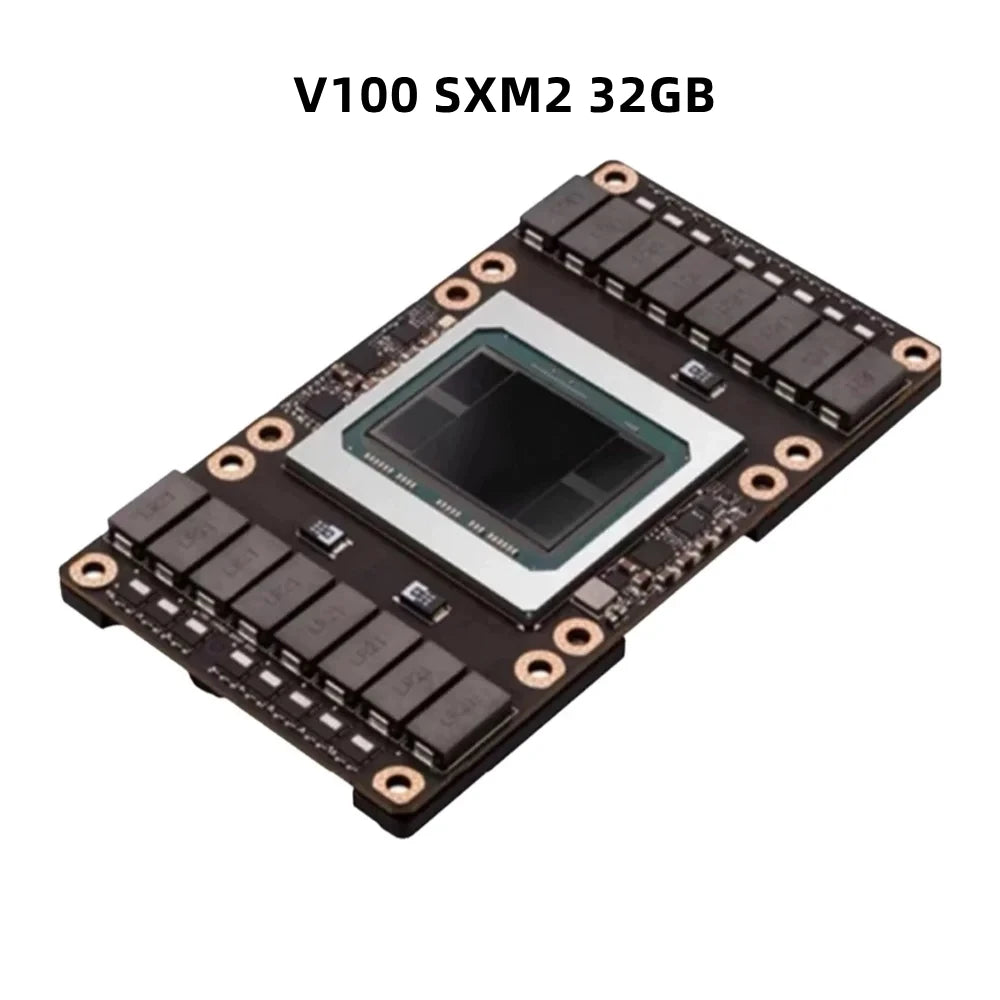
- Dual-Channel SXM2 Topology Layout: The baseplate integrates two dedicated clusters of high-density SXM2 mezzanine sockets, allowing the concurrent deployment of two NVIDIA Tesla V100 (or P100) SXM2 compute cards. This drastically simplifies multi-GPU system building by consolidating multiple slots onto a single main hub.
- Native 300GB/s Peer-to-Peer NVLink Interconnect: This is the core competitive advantage of the baseplate. It leverages internal high-speed PCB traces to fully route point-to-point NVLink connections between both V100 cards at full 300GB/s physical bandwidth. This bypasses traditional PCIe bandwidth bottlenecks, drastically accelerating data synchronization during multi-GPU Large Language Model (LLM) inference and deep learning training.
- Standardized 244mm Square Dimension: Engineered with a highly uniform 244mm by 244mm layout matrix. This layout perfectly matches standard computer chassis profiles or desktop server rack rails, maximizing local compute density while minimizing vertical footprint.
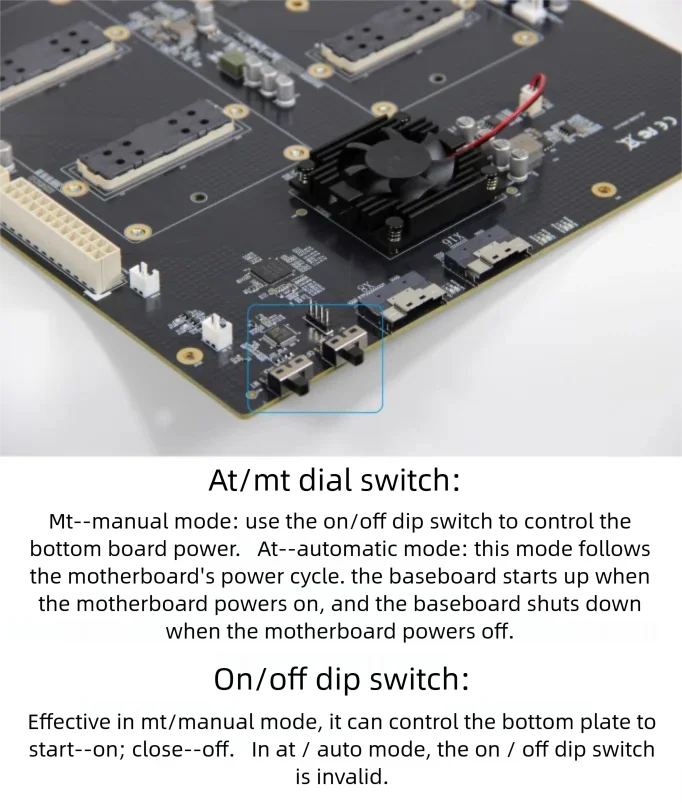
- Onboard Micro-Active Cooling & Microcontroller: Built with standalone onboard logic controllers and an integrated micro-active cooling fan. This assembly provides dedicated thermal relief for the baseplate's clock generators, switching logic, and supplementary power delivery tracks under severe workloads.
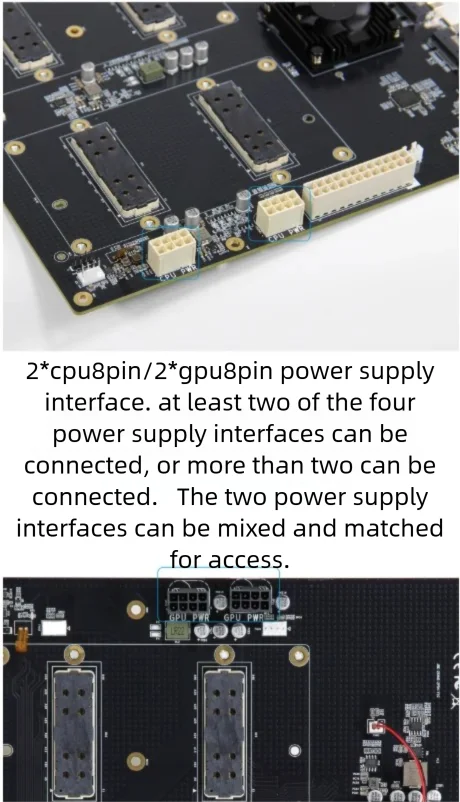
- Heavy-Duty Centralized Power Distribution: Equipped with high-amperage terminal input rows and heavy-duty filtering capacitor rows. This architecture securely balances and splits the 12V incoming currents to cleanly feed both GPUs, which can demand a combined continuous power draw of 600W to 700W.
⚠️ System & Topology Requirements
- External Host Controller Linkage: This hardware operates strictly as an expansion baseplate. It requires secondary external connection cabling (such as high-speed SlimSAS SFF-8654 or OCuLink lines) to bridge out to a master host PC or dual-socket server motherboard. Before deployment, you must confirm your host system's BIOS supports deep PCIe Bifurcation splitting to correctly discover both target endpoints.


1:The seller accept mistakes and don't work and the defective commodity.
2:The buyer can choose to replace the product or full refund and refund items.
3:Buyers pay the freight on to China, the seller pay the freight the to your country.
4:When the seller confirm receipt the returned products, so, the seller will contact you in time.
5:If a buyer to buy the wrong product, he will pay all the freight and pay 15% service charge.
6:If you have any question,please let me know.we would be happy to help you!

12+ Years of Industry Experience
Professional experience in computer components and spare parts.
Strict Quality Control
Products are inspected and tested before shipment.
Stable Supply Chain
Reliable sourcing for regular and bulk purchasing.
Wide Product Range
Laptop, desktop, workstation and server components.
B2B Wholesale Support
Flexible solutions for wholesalers, distributors and repair businesses.
Global Shipping
International logistics support for customers worldwide.
